Purse · 2025 — 2 weeks

Fast Checkout

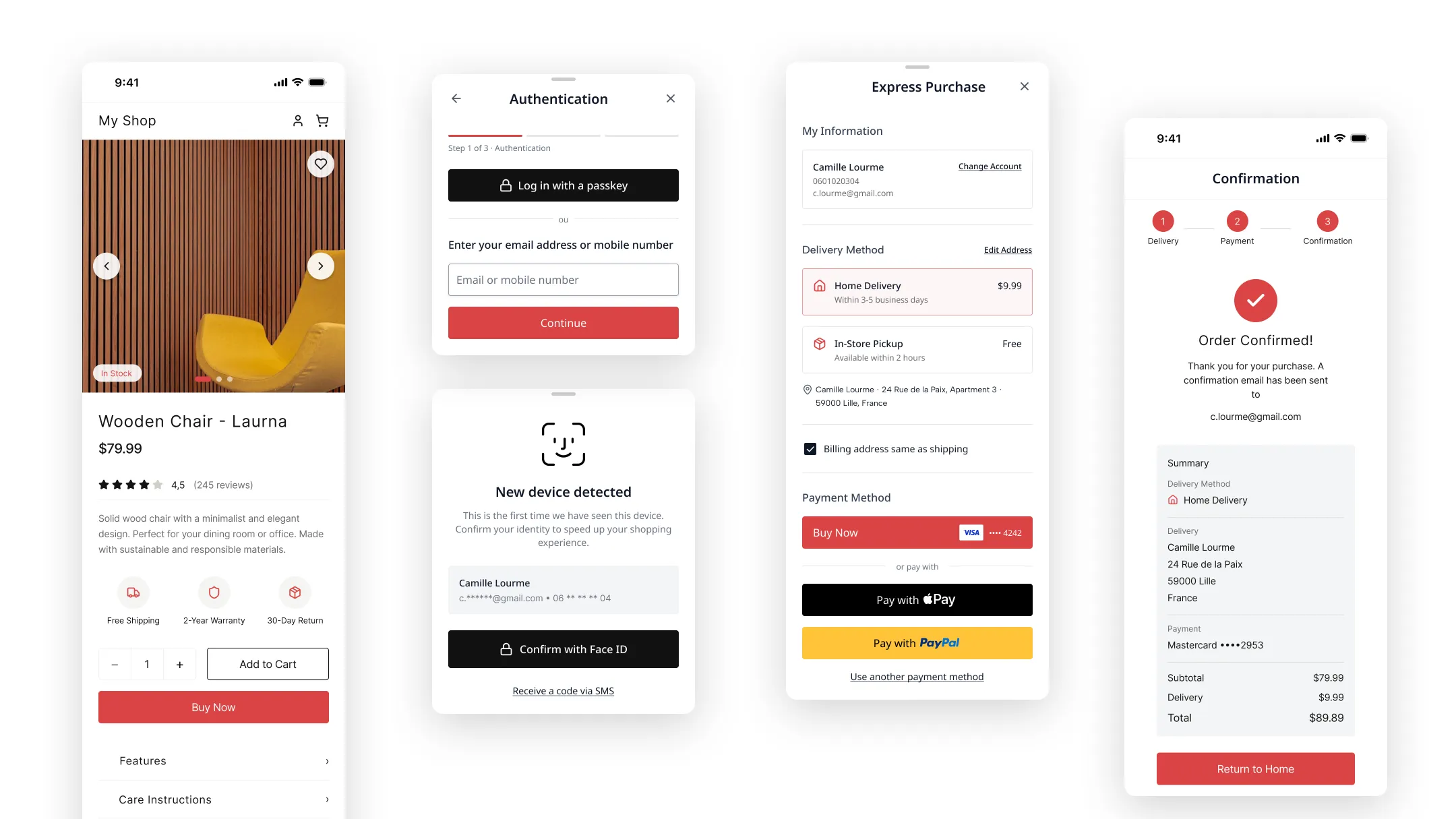
A one-tap checkout widget merchants can drop into a product page or cart, with enough theming to still look like theirs.

Purse — fast checkout flow
Role
Sole Product Designer, paired with the PM: interviews, flows, widget UI, design system
Team
1 PM, frontend SDK engineers
Users
B2C shoppers; integrated by marketing and e-commerce teams
Scope
Widget, SDK, customisation tokens, payment page
In short

Our clients wanted express checkout on the product page, but integrating it meant touching the checkout funnel. Four client interviews surfaced the same blocker. With the PM, we scoped a first version we could ship in two weeks, design and code included: a widget ready to drop onto a product page.

  • +3%checkout conversion rate, measured on 4 merchants
  • 2 weeksto ship, design and development included
  • 4 of 4interviewed clients blocked by the same problem
Context

The fast path was the hardest thing to install

Merchants wanted a quick-buy button straight from the product page or the cart. In practice, wiring that into an existing storefront meant touching the checkout, and that is the one part of an ecommerce site nobody wants to rebuild.

The problem

Integrating a fast purchase from a product page or cart was too complicated to be worth it for most merchants.

  • Every storefront exposed its cart differently, so each integration was bespoke.
  • Marketing teams could not ship it without a developer sprint.
  • A generic widget looked foreign on the page, so merchants refused it.
How I worked

One shared blocker, two weeks to ship

  1. Client interviews

    Four clients interviewed, the same blocker four times: express checkout meant touching the checkout funnel, so a development project.

  2. Funnel analysis

    The existing flow broken down step by step, to remove what could go without losing the shopper’s trust.

  3. Widget and SDK

    One component that behaves the same on a product page, a cart and on mobile.

  4. Token customisation

    A limited set of exposed tokens so the widget safely takes on the merchant’s identity.

Trade-offs

The calls that shaped the product

What scope for the first version?

Ship in two weeks, then measure

With the PM, we limited V1 to the essentials: the widget, express payment and token customisation. Enough to prove the value on real merchants before going further.

What settled it: the company strategy, simplifying the buying experience, and the same blocker at all four interviewed clients.

Not this: A months-long project covering every integration case, before any measurement.

How much freedom should merchants get?

Tokens, not free CSS

Merchants change colours, corner radius and type scale. Layout, spacing and payment states stay ours.

What settled it: layout and payment states carry trust and compliance; colours carry the brand.

Not this: Full CSS freedom. It would have won the demos and broken the payment step in production.

One component per placement, or one for all?

One widget for every placement

The same component adapts to the product page, the cart and mobile.

What settled it: in two weeks, one well-tested component beat three variants, and merchants have a single integration decision to make.

Not this: One widget per placement: simpler to design, but three times the integration decisions for the merchant.

Impact

+3% conversion, shipped in two weeks

The widget turned a development project into a configuration step. On the first four live merchants, checkout conversion rose by 3%. Marketing teams place it themselves and change its look without opening a ticket.

Conversion lift measured on the first 4 live merchants; figure rounded and anonymised.

  • Checkout conversion rate+3%
  • Design and development2 weeks
  • Placements covered by one component3
What I took away

For an SDK, the real user is the person integrating it. The shopper experience only exists if the integration was easy enough to ship.

What I would do differently: publish the theming documentation alongside the first release instead of after it.